24/9/22

A Feodosia es va obrir un monument creu en record de l'èxode rus


El 24 de setembre va tenir lloc a Feodosia l'obertura i la consagració d'un monument creu dedicat a l'Èxode rus. El passat dissabte 24 de setembre de 2022, a Feodosia, al parc de la intersecció dels carrers Viti Korobkova i Tsiolkovsky, va tenir lloc l'obertura i consagració d'una creu monumental dedicada a l'Èxode rus. El cartell commemoratiu es va erigir per commemorar el 102è aniversari de l'èxode rus per la Fundació Heritage, la Unió de Societats Històriques i Educatives "Patrimoni de l'Imperi" amb el suport de l'organització pública interregional "Unitat Russa", l'administració de Feodosia, el projecte "Cultura de la Pàtria Petita" del partit Rússia Unida, segons el lloc web de la SIPO "Heritage of the Empire".

La bella creu blanca feta pel taller de V.M Klykov va ser recreada segons els esbossos de l'autor d'A.V. Klykov. La mateixa creu es va obrir l'any 2005 al terraplè de Kerch.

L'acte solemne va ser obert pel president de la Fundació del Patrimoni, el tinent general L.P. Reshetnikov: "Avui estem inaugurant un monument a aquells que van lluitar per una Rússia unida i indivisible. I avui podem sentir aquestes paraules més que mai, perquè els nostres familiars, amics i soldats van al front per lluitar per una Rússia unida i indivisible. En la nostra integritat, en la nostra sobirania estan la nostra força i el nostre futur". Reshetnikov va assenyalar que aquesta creu, l'última obra de l'escultor Andrei Klykov, va decorar la ciutat i va agrair a les autoritats de Feodosia el seu treball per millorar la plaça.

La iniciativa d'instal·lar un rètol commemoratiu a Feodosia va comptar amb el suport del president del Consell de Supervisió de l'organització pública regional de Crimea "Unitat Russa" E. A. Aksenova, que va arribar a l'obertura de la creu. En el seu discurs de benvinguda, va agrair a L.P. Reshetnikov la preservació de la memòria històrica i a l'administració de Feodosia pel seu suport integral i la seva càlida benvinguda. “Nosaltres, juntament amb vosaltres, no permetem que es tornin a escriure aquelles pàgines de la nostra història que potser a algú no li agraden. Estic a favor de la justícia històrica i de la preservació de la veritat. Aquest monument està dedicat a aquelles pàgines de la nostra història que algú voldria oblidar o reescriure. Però això és part de la nostra història, part del nostre país. I hem de conèixer la història del nostre país i estimar-la, sigui quina sigui l'època”, ha subratllat E. A. Aksenova.

El primer adjunt del cap de l'administració de la ciutat de Feodosia, V.V Popenkov, va assenyalar que va ser un gran honor per a ell assistir a la inauguració d'aquest monument: "Cal conèixer la història, sigui quina sigui. Si no coneixes la teva història, aprendràs la d'una altra persona. Hem d'unir-nos al voltant de la nostra gran història perquè les seves terribles pàgines no es repeteixin mai”.

El 1920, uns 30 mil dels nostres compatriotes van abandonar Feodosia, la majoria dels quals eren cosacs de Kuban. I.V Provorov, un descendent d'aquells cosacs de Kuban que es van exiliar fa 102 anys, va arribar de la regió de Krasnodar per assistir a l'obertura de la creu commemorativa. Es va dirigir a l'audiència: "Tres dels meus parents van marxar de Rússia aquí mateix a Feodosia. Aquest monument, aquesta creu és molt important per a mi. Avui realment necessitem "tornar a Rússia", com diu L.P. Reshetnikov. Restaurar la memòria històrica, preservar la fe i l'esperit. I llavors aixafarem els nostres enemics".

Sa Gràcia Agathon, bisbe de Koktebel, vicari de la diòcesi de Feodosia, va consagrar la creu i s'ha dirigit als congregats amb un breu sermó: “Avui estem aquí una bella creu, recordant una altra creu, que va ser portada fa 102 anys pels nostres compatriotes, marxant a l'exili, i els que es van quedar al teu país. Tots estaven units per la fe en Déu. Això els va ajudar a sobreviure. Tu i jo estem en un lloc sant. Aquí, l'any 1924, els bolxevics van fer volar un temple dedicat a Sant Nicolau el Taller de Meravelles. Mireu, avui hem consagrada la creu on està representat Sant Nicolau el Taller de Meravelles. Crec que amb esforços conjunts restaurarem el temple en aquest lloc. Donem les gràcies a Leonid Petrovich i a la Fundació Heritage per aquest monument creuat que ha decorat la nostra ciutat".

Al seu torn, L.P. Reshetnikov va assenyalar que quan es va començar a treballar en aquest monument, ningú sabia que hi havia un temple dedicat a Sant Nicolau en aquest lloc. “Això no és una casualitat, sinó un autèntic miracle! "Una reverència baixa a l'arquitecte que va incloure el monument en aquesta plaça i a la gent que va enjardinar la zona", va dir.

Al final de la cerimònia es van dipositar flors al monument.


Read more »

11/9/22

Els guerrers ortodoxos que van caure al camp de batalla per la Fe, el Tsar i la Pàtria van ser recordats a Sant Petersburg.

L'11 de setembre de 2022, el dia de la decapitació del venerable cap de Joan Baptista, a Sant Petersburg, les files de l'EMRO i els companys d'armes de RIS-O van celebrar amb un record de pregària de tots els guerrers ortodoxos que va caure al camp de batalla per la Fe, el Tsar i la Pàtria.

Enguany el funeral ha tingut lloc a l'Església de la Nativitat de Joan Baptista a l'illa de Kamenny; Va servir l'arxipreste Vadim Burenin.
Abans de començar el funeral, el P. Vadim va dir unes paraules sobre la història del temple, construït i consagrat durant el regnat de l'emperadriu Caterina la Gran i va recordar que els grans comandants russos - A.V - també van resar sota els seus arcs. Suvorov i M.I. Kutuzov.

Durant el servei commemoratiu, els membres de la Casa Imperial Russa, els generals i comandants navals russos, els líders del moviment blanc, així com el fundador i tots els líders de la Unió Militar Russa van ser recordats pel seu nom.

A més dels líders i membres de les ROWS i RIS-O, un grup de cosacs i Dmitry Evgenievich Kornilov, descendent de la sisena generació de l'heroi de la defensa de Sebastopol, el vicealmirall V.A., que venia de París, van estar presents a la servei de memoria. Kornilov (1806-1854).

En acabar el funeral, el president de l'EMRO, el capità I.B. Ivanov va lliurar les medalles "En memòria del 100è aniversari de la lluita blanca" a personatges públics que es van distingir en l'àmbit de l'educació històrica i l'educació patriòtica dels joves, així com espases per als premis "Per la distinció militar" a un grup d'oficials. que va participar en la lluita al Donbass. I el cap del Departament de Sant Petersburg de RIS-O B.S. Turovsky, felicitant els reunits, va fer una crida a tothom a donar suport a la processó religiosa de tota la ciutat, que tradicionalment se celebra a la capital del Nord el dia de Sant Príncep. Alexandre Nevski.

Read more »

29/8/22

A la regió de Tambov es va erigir un monument a l'heroi de la Primera Guerra Mundial i de la Guerra Civil

Al poble de Belomestnaya Kriusha, a la regió de Tambov, es va instal·lar un baix relleu commemoratiu en honor a la Guàrdia Blanca i heroi de la Primera Guerra Mundial Fiodor Skvortsov, informa l'administració de la regió de Tambov.

Els autors del monument van ser pare i fill Ruslan i Nikita Kurokhtin, que fan baixos relleus en honor a personal militar distingit associat a la terra de Tambov.

Fyodor Luyanovich Skvortsov va néixer el 13 d'abril de 1884 (estil antic) al poble de Belomestnaya Kriusha, Lysogorsk volost, província de Tambov. El 1890, es va traslladar amb els seus pares al poble de Kolyvanskoye, Cheremnovsky volost, província de Tomsk. Cridat per al servei a l'Exèrcit Imperial Rus l'1 de gener de 1906 (Art antic) al 29è Regiment de Fusileros de Sibèria Oriental. Després de completar el seu període de tres anys de servei, es va quedar voluntàriament per a un servei ampliat.

Va lluitar al front alemany com a part dels 29è i 67è regiments de fusells siberians a Prússia Oriental, Polònia i Bielorússia. Va començar la guerra com a ensenya, el setembre de 1915 va ser ascendit a ensenya de la infanteria de l'exèrcit per distinció militar, i va acabar la guerra com a capità d'estat major, comandant de la 8a companyia del 29è Regiment de Fusileros Siberià. En les batalles va ser ferit i va ser impactat per obusos.

El 4 de juliol de 1918 va ser reclutat a les tropes del Govern Provisional de Sibèria. Com a part del 3r Regiment de Barnaul, va participar en batalles al ferrocarril Circum-Baikal i al front de l'Ural.

Va ser assassinat en la batalla amb l'Exèrcit Roig durant l'assalt al poble de Tabory, província de Perm, el 8 de març de 1919. Ascendit pòstumament al rang de capità pel fet que en la batalla del 8 de març prop del poble. Taborsky, al comandament d'una companyia, en un atac a una posició enemiga fortificada, sota el foc destructiu de rifles i metralladores de l'enemic, va mostrar un coratge i una valentia excepcionals, caminant per davant de la seva companyia i segellant amb la seva mort l'amor i la devoció a la Pàtria. Va ser enterrat a la catedral de l'Assumpció d'Okhansk.


Read more »

7/8/22

Premis EMRO per distincions de combat


El president de la Unió Militar General va signar una ordre per premiar els voluntaris de l'EMRO que es van distingir durant l'Operació Militar Especial a Ucraïna.
L'1 d'agost de 2022, en el Dia del Record dels Herois de la Gran Guerra, el president de la Unió Militar General Russa, el capità I.B. Ivanov va signar una sèrie d'ordres per atorgar als voluntaris de l'EMRO que es van distingir durant l'Operació Militar Especial a Ucraïna amb les medalles "100 anys de la lluita blanca" amb espases per a la distinció militar, així com per atorgar espases per a la distinció militar a més de les medalles existents. .
Una d'aquestes ordres diu, en part:
"A través del treball militar i la sang de soldats de l'exèrcit rus, formacions armades de la DPR i LPR i voluntaris russos, les terres primordialment russes, arrencades de la nostra pàtria pels bolxevics i els seus successors, són alliberades del règim titella d'Ucraïna. nacionalistes i separatistes De nou, com en 1917-1920 i 2014, la terra de la Nova Rússia i els guerrers russos de Slobozhanshchina entren en batalla per la fe ortodoxa, per la Rússia Gran, Unida i Indivisible, pel dret del poble rus a viure a la seva terra. sense por, per parlar i criar els seus fills en la seva llengua materna Honor i glòria a tots els nostres companys que en aquesta lluita, amb les armes a la mà, avui recolza dignament les tradicions de combat de l'exèrcit rus. Unió Militar i voluntariat!

Read more »

31/7/22

Conferència en línia amb V.Zh. Tsvetkov "General A.I. Denikin: liberal rus d'uniforme"

El 12 d'agost a les 20:30 conferència en línia amb V.Zh.  "General A.I. Denikin: liberal rus d'uniforme".

Inscripcions per correu:
beloedelo.moscow@gmail.com

Tsvetkov acaba de presentar d'un nou llibre molt interessant  sobre la batalla per Crimea a la tardor de 1920.


Read more »

18/7/22

Dozens of thousands pay tribute to the Russian Imperial Family killed in 1918


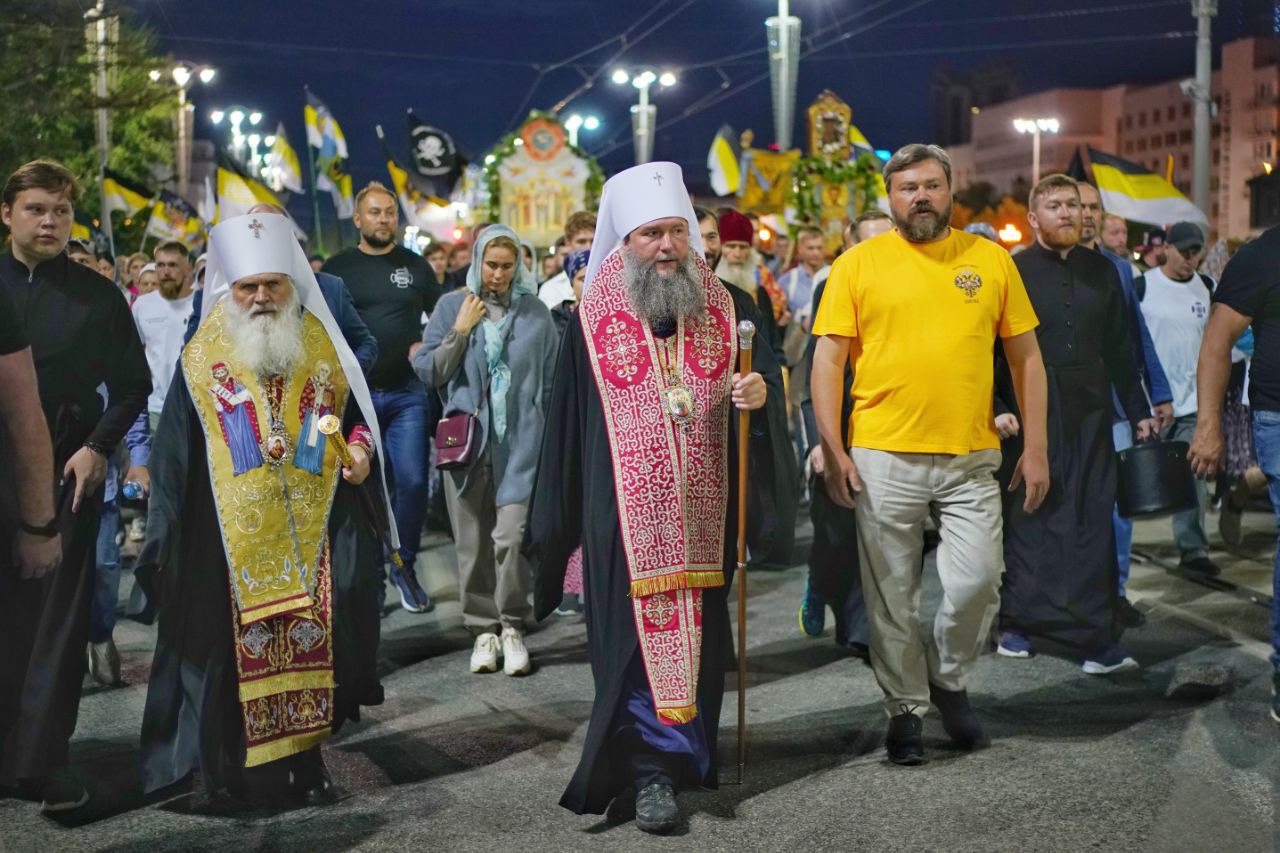
The ARNS Forum "Orthodoxy and the World in the 21st Century" was dedicated to the killing of the Russian Imperial family on July, 17 1918, at which he delivered a lecture "Empire. Image of the Future". Soon the Royal Procession begins from the Yekaterinburg Church on Blood, erected on the site of the regicide, to Ganina Yama, where the bodies of the martyrs were destroyed.

Konstantin Malofeev, the founder of Tsargrad, and head of the Double Headed Eagle Society said: "Every time I participate in this procession, I experience an amazing feeling of spiritual and national unity. But today it is special: many thousands of Russian Orthodox people who arrived in Yekaterinburg on the Tsar's Days are right now conciliarly praying to the Royal Passion-Bearers for the Russian Victory, stolen from us in 1917, when the Russian Empire was already preparing for the Bosphorus operation and the liberation of Constantinople."

The main procession of the year [video] - the Royal Way from the Yekaterinburg Church on the Blood to the Monastery of the Holy Royal Passion-Bearers on Ganina Yama - has been passed. The triumph of Russian unity, sanctified by Holy Orthodoxy, is revealed to the whole world. Feelings overwhelm: tens of thousands of Russian people united in spirit shoulder to shoulder in a single impulse.


Sverdlovsk Governor Yevgeny Kuyvashev appeared at the Divine Liturgy, which is the main event of the Tsar’s Days in Yekaterinburg. The religious procession from the city center to Ganina Yama began without the participation of the head of the region, a URA.RU correspondent reports from the scene.

“Column with the participation of metropolitans [Екатеринбургского] Evgenia and [Ташкентского] Vincent moved out from the Temple-on-the-Blood. Several thousand people are participating in the procession,” the correspondent said. It is planned that the pilgrims pursue to the village of Shuvakish, from where they turn to Ganina Yama. There is no exact data on the number of participants in the course yet.

The non-appearance of the governor at the procession of the religious procession is considered natural. According to URA.RU, since July 2021, Kuyvashev has been in extremely cold relations with Metropolitan Eugene (Kulberg). On the eve of last year’s religious procession, they had a conflict: due to the coronavirus pandemic, the head of the region banned the procession, but the bishop still called on the faithful to gather. Kuyvashev was pissed off.

Negotiations were conducted with the metropolitan, and he agreed to the only concession – he urged pilgrims to wear protective masks. Since then, relations between the two leaders have remained tense, according to rumors, they have never spoken in a year. This time, Kuyvashev was expected at the procession in connection with the upcoming gubernatorial elections: in September, the head of the region runs for a new term.

The last time Kuyvashev participated in the procession was in 2018, when the procession was timed to coincide with the 100th anniversary of the execution of the Romanov royal family. Then the Patriarch of Moscow and All Russia Kirill flew to Yekaterinburg. He was accompanied in the column by the first persons of the Sverdlovsk region, and in total more than 100 thousand people came out to that procession.


The expedition commander, cosmonaut Oleg Artemiev got in touch with the participants of the “Tsar’s Days” in Yekaterinburg. He greeted them during the night service, Metropolitan Eugene of Yekaterinburg reported on his telegram channel.

“Before the procession, during the night service at the Church on Blood, the pilgrims were greeted directly from the ISS by the expedition commander, Russian cosmonaut Oleg Artemyev. Let us pray to the Holy Great Martyr Catherine for our cosmonauts and wait for their return to Earth, hoping to share the joy of communion in the year of the 300th anniversary of Yekaterinburg,” the metropolitan wrote.

Artemiev, in turn, conveyed his regards to the pilgrims and congratulated the people of Yekaterinburg on the upcoming 300th anniversary of the “city of St. Catherine”. He showed that on board the rocket is an icon of the patroness of Yekaterinburg. After returning to earth, the cosmonaut plans to return it to the one who gave it – Metropolitan Eugene.

In Yekaterinburg, the Royal procession took place at night. It was attended by 50 thousand people, of which five thousand were pilgrims who came from other cities and countries. Earlier, the agency said that the head of the region, Yevgeny Kuyvashev, missed the procession, attending only the service. Before the start of the procession, one of the Yekaterinburg women fainted.

 Ceremony in Kuban 

The main events of the Tsar's Days took place in Yekaterinburg - the Royal Procession and the Prayer at Ganina Yama 

Russia: In Yekaterinburg, the procession in memory of the Romanovs gathered about 36 thousand people


Read more »

15/7/22

Aplec del Regiment

Trekking de 10 quilòmetres a cavall a l'Aplec del Regiment. Durant la campanya, es va practicar el desplegament de destacaments en formació de batalla i la interacció de cavalleria i infanteria, inclòs amb un carro metrallador tirat per cavalls. L'any vinent afegirem un de tres polzades! Aneu àguiles!


Read more »

3/7/22

"Renaixement de l'exèrcit rus", dedicada a la història del Moviment Blanc


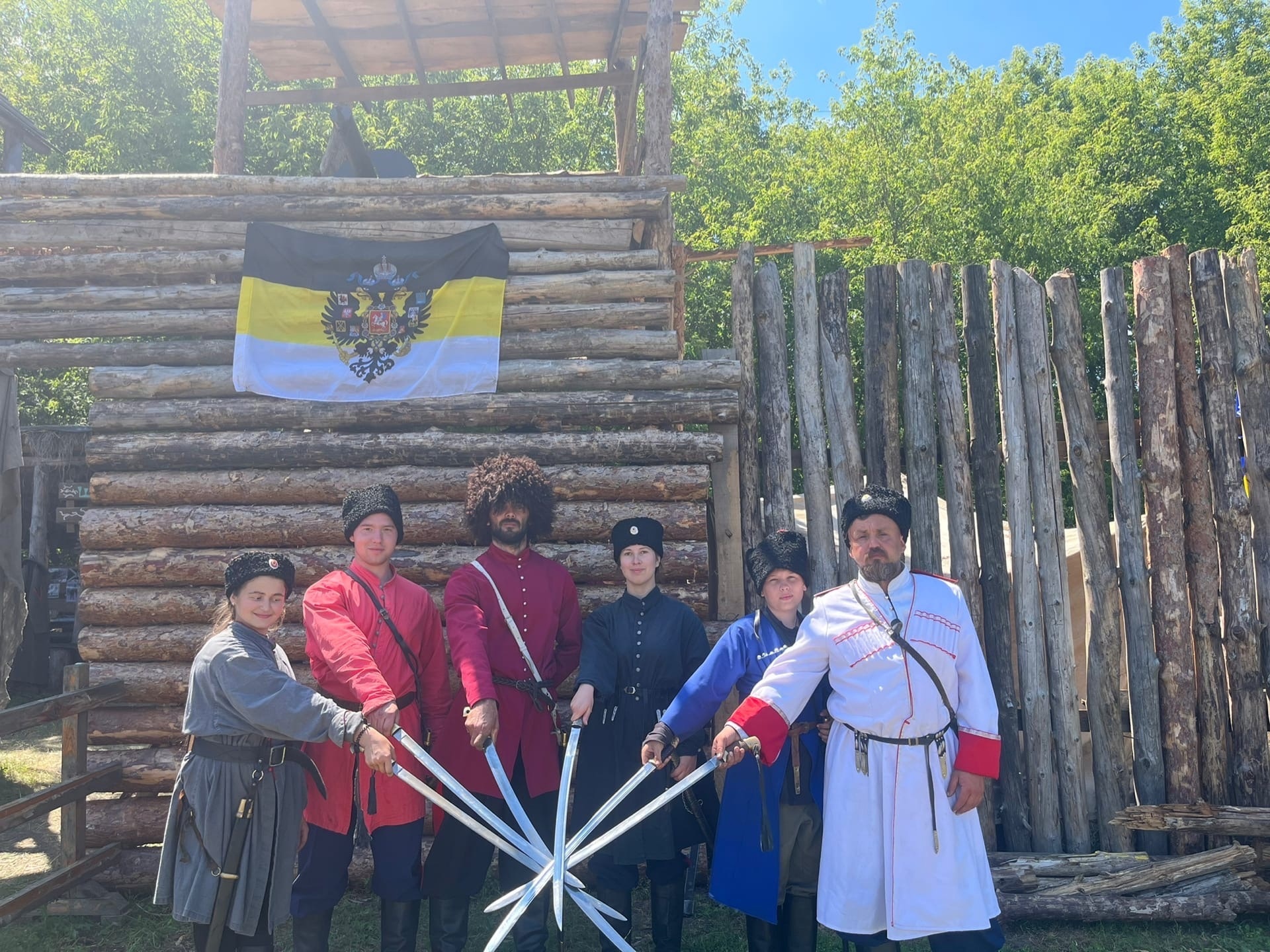
Els dies 1, 2 i 3 de juliol, el nostre club, amb el suport de KSK "Derzhava", va celebrar una reunió històrica-militar "Renaixement de l'exèrcit rus", dedicada a la història del Moviment Blanc. Els participants de l'esdeveniment van ser els nostres amics i persones afins de Moscou, Sant Petersburg, Voronezh, Zheleznogorsk, Belgorod i la regió. Aquests tres dies van incloure molts esdeveniments: passejades a cavall, demostracions per als convidats de l'esdeveniment, competicions de tir i tall de sabre, classes d'entrenament militar i de simulacre i molt més! I tot això en un ambient espiritual d'obertura, unitat i comprensió mútua. El nostre grup publicarà diverses publicacions amb una descripció més detallada dels esdeveniments d'aquests tres bonics dies de sol.


L'abril de 2022 el regiment celebra el seu 10è aniversari! La cerimònia d'encesa va tenir lloc l'any 2012 a l'Església de l'Arcàngel Miquel del poble de Golubino. La imatge de la Mare de Déu a la pancarta era la patrona de la comunitat agrícola Blagoveshchenskaya de l'organització Novooskol stanitsa. Després de la reorganització del poble de Novooskolskaya i la creació del club històric-militar cosac "Belgorod Zasechnaya Cherta", l'ataman Ruslan Leonidovich Iskra el va traslladar al club el 2013.


Read more »

26/6/22

En memòria dels oficials rebels d'Stavropol


26 de juny de 2022 al territori de la Catedral de Sant Andreu de les muntanyes. Stavropol va acollir un acte solemne dedicat al 104è aniversari de la revolta dels oficials.

El juny de 1918, en resposta al terror desfermat pels bolxevics, un grup d'oficials, estudiants de secundària i cadets sota el comandament del cavaller de Sant Jordi, el coronel Pavel Fedorovich Rtishchev i el seu germà Peter, es van pronunciar contra la tirania en curs. i violència. L'aixecament va ser reprimit brutalment i els germans van ser executats públicament al recinte firal. Després que la ciutat fos ocupada per l'Exèrcit de Voluntaris, ells, com altres participants a l'aixecament, van ser enterrats de nou al cementiri proper a l'església de Sant Andreu, que posteriorment va ser destruït l'agost de 1939.
L'any 2017 es va erigir un monument en aquest lloc i el 7 de novembre es va inaugurar solemnement, que va ser consagrada pel bisbe governant, el metropolità Kirill (Pokrovsky). El tinent general de l'SVR Leonid Petrovich Reshetnikov, ara president del Consell de Coordinació de la Unió de Societats Històriques i Educatives "Patrimoni de l'Imperi", va participar activament en la creació del memorial.

La litiya per als assassinats va ser atesa pel cap del departament cultural de la diòcesi de Stavropol i Nevinnomyssk, l'arxipreste Mikhail Mozdor.
Al final del funeral, els ponents van incloure: membre de la Unió de Periodistes i de l'Associació d'Advocats de Rússia Vyacheslav Sergeevich Myatishkin, l'escriptor de Stavropol Ivan Ivanovich Lyubenko i el professor Alexander Chernovoloa.
Vera Mitina, la besnéta de Peter Rtishchev, i la seva família van assistir a l'acte.
Al final de la part cerimonial, els presents van dipositar flors a la memòria dels participants caiguts en l'aixecament.
Al final de la cerimònia de posada a l'edifici del Seminari Teològic de Stavropol, es van fer informes rellevants: membre de la societat regional d'historiadors i arxivers Otradnensky Roman Anatolyevich Kapanitsky, president i fundador de la societat Sergei Garievich Nemchenko, Vladimir Serdyukov, Roman Nemtxenko, historiador Alexey Ivanovich Krugov. Igor Anatolyevich Klimushin va demostrar part de la seva col·lecció de premis de la Rússia Imperial.
Al final de l'acte, l'arxipreste Mikhail Mozdor va dir la seva paraula pastoral, i l'ataman adjunt de la Belorechensky RKO per a la cultura física i els esports, membre de la societat regional d'historiadors i arxivers Otradnensky, el sergent Gennady Valerievich Butorin va presentar una còpia del llibre. de l'ataman de la comunitat lineal Trans-Kuban Oleg Vladimirovich Postnikov "Notes d'un oficial (a la història del poble de Belorechenskaya)" a la biblioteca del seminari i un dels organitzadors de l'esdeveniment, Vyacheslav Sergeevich Myatishkin.

Read more »

Dos nous monuments al Tsar Nicolau II

El 19 de maig de 2022, va tenir lloc una solemne cerimònia d'inauguració del bust-monument al Sant Portador de la Passió Reial - Sobirà Emperador Nicolau II Alexandrovich al territori de la Catedral de la Intercessió a la ciutat d'Elabuga. 'acte commemoratiu es va programar per coincidir amb l'aniversari del Sant Tsar Nicolau (19 de maig de 1868). La cerimònia va comptar amb la presència del líder i confessor de l'Assemblea Noble del districte de Yelabuga, l'arxipreste de mitre Sergiy Lepikhin, membres de l'Assemblea Noble del districte de Yelabuga, imperials del departament de Volga-Kama de RIS-O i feligresos del temple. Després de l'ofici, va tenir lloc la solemne inauguració i consagració del bust del Sant Sobirà Emperador Nicolau II. La consagració del monument va ser realitzada per l'arxipreste Sergius Lepikhin. Cal assenyalar que gairebé tots els treballs per al desenvolupament del territori i la instal·lació del monument dins de la tanca de l'església van ser realitzats pel líder de l'Assemblea de la Noblesa del districte de Yelabuga.


L'obertura i la consagració del monument al sobirà emperador Nicolau II va tenir lloc a Vladimir

El 26 de juny de 2022, el dia de Tots Sants que van lluir a la terra russa, es va fer l'obertura i la consagració del monument al sobirà emperador Nicolau II al territori de la parròquia de la Santíssima Trinitat a la ciutat de Vladimir. El ritu de consagració va ser realitzat per Stefan, bisbe de Kovrov, vicari de la diòcesi de Vladimir; Mitra arxipreste Sergius Festinatov, degà del deganat de la catedral de la ciutat de Vladimir i l'arxipreste mitredo Evgeniy Borovskikh, rector de la parròquia de la Santíssima Trinitat. Els iniciadors de la creació del monument van ser l'arxipreste Evgeny Borovskikh, cap de la comunitat "Subjectes lleials" Denis Skosyrsky i l'escultor Vladimir Ilya Shanin. El monument es va erigir amb donacions públiques. En l'obertura del monument van participar representants de la comunitat "Subjectes lleials", l'oficina de representació de Vladimir de l'Ordre de la Unió Imperial Russa i la branca de Vladimir de l'associació de societats històriques "Patrimoni de l'Imperi".


A Tambov, representants de les organitzacions patriòtiques russes van honrar la memòria del tsar-màrtir

20/05/2022 08:42

El 19 de maig de 2022, a Tambov, en l'aniversari del sobirà emperador Nikolai Alexandrovich, representants d'una sèrie d'organitzacions patriòtiques russes van dipositar flors al bust del tsar-màrtir situat al costat de la catedral de la Transfiguració. Entre els participants hi havia V.V Sorokin - representant de l'Associació de Societats Històriques i Educatives "Patrimoni de l'Imperi", vicelíder de l'Assemblea de Nobles de Tambov, membre de la Societat Vorontsov, membre del Consell de VOOPIK, I. A. Martynov - Suprem. Ataman de la Unió dels cosacs del Don, coronel cosac (Michurinsk), V.V Panteleimonovich - ataman de la societat cosaca de la branca de Tambov, membre de la Cambra Pública de la regió de Tambov, N.N. Tveritinov - líder de l'assemblea noble de Tambov. A.V. Kozachek és el director executiu de l'Associació "United University que porta el nom de V.I. Vernadsky", educació professional de la Federació Russa, V.E. Andreev és un historiador local, periodista, membre de la Unió de Periodistes de Rússia, membre de la Unió d'Escriptors Russos, candidat de ciències filològiques, estudiants cosacs del TOGBOU "Internat de cadets cosacs que porta el nom del comte I.I. Vorontsov-Dashkov" i altres ciutadans respectats. Abans de posar flors, els reunits van resar a la icona del Sant Tsar-Màrtir Nicolau, que havia estat a l'espai.

Read more »

22/5/22

Cossack Volunteers sent to the Donbass


Eight Cossack volunteers left the Military Commissariat of the Kalachevsky District for the area of ​​the special military operation in Donbass. Confessor of the Kalachivske-on-Don, Priest Valery Nikulov blessed the soldiers to fight the fascist plague on the territory of Ukraine. Ataman OKO "Second Don Cossack District", with the sponsorship of all those who are not indifferent, understaffed the guys with uniforms and special equipment for more efficient performance of combat missions.

Read more »

21/5/22

The Russian Tsesarevich announces that his wife is pregnant


"I am happy to inform you that Victoria and I are expecting a new addition to our family this autumn." With this message George Romanov (1981) Tsesarevich, Grand Duke and Imperial Highness which is still being questioned. He is the son of Maria Vladimirovna (1953), the claimant to the Headship of the Imperial Family of Russia. Grand Duke George Mikhailovich of Russia married in Moscow on 24.09.2021 Rebecca Virginia Bettarini (1982), with 1,500 guests and having received the permission of Grand Duchess Maria. His mother decreed that Bettarini would have the title of Princess, with the predicate "Her Serene Highness" and the right to use the surname Romanova from her marriage, which therefore implies that theirs is a morganatic union.Victoria Bettarini is the Director of the Russian Imperial Foundation. She is daughter of Roberto Amedeo Simeone Bettarini (1947), an Italian diplomat, ambassador in Luxembourg from 2006 to 2010 and in Brussels from 2010 and 2013, and wife Carla Virginia Cacciatore (1945). On 12 December 2008, the Tsesarevichhe was appointed an aide to the Director General of MMC Norilsk Nickel, a major Russian nickel-mining company. In 2012 he was nominated chief executive of Metal Trade Overseas, the main sales hub for Norilsk Nickel in Switzerland. In 2014 he started his own company, Romanoff & Partners, in Brussels.

Read more »

19/5/22

Memorial cross in memory of the Cossacks of the Don Army killed by the Communists in 1918-1920

Not far from the farm Rakovka (Sukhov-2) of the Mikhailovsky district, the Cossacks of the Ust-Medveditsky district (Mikhailovsky yurt) erected a cross in memory of the Cossacks of the Don Army, who defended the faith of Christ and the All-Great Don Army in 1918-1920. place of the brutal execution of cornet Ivan Kolodkin Felippyevich and ensign Bagrov. The memory of the dead was honored with a minute of silence and a volley of weapons was fired.


Read more »

6/5/22

Union of Cossack Warriors of Russia and Abroad talks about the role of the Cossacks in the conflict in Ukraine

The Russian Cossacks actively support and participate in the operation in Ukraine. At the same time, the state is removed from a full-fledged dialogue with it, says Cossack colonel, member of the Supreme Council of the Union of Cossack Warriors of Russia and Abroad Nikolai Kolzhanov

According to the All-Russian Cossack Society, there are 170,000 registered Cossacks in Russia. Their main task is to help organize public order and cultural and patriotic education. Cossacks are also participating in the current conflict in Ukraine - up to 10 Cossack units numbering over 4 thousand people are fighting on the side of the union republics of Donbass. However, the Cossacks traditionally want more - the revival of the whole estate, says Nikolai Kolzhanov - the captain of the Soviet army, a Cossack colonel, a member of the board and a member of the Supreme Council of the Union of Cossack Warriors of Russia and Abroad.

Nikolai Kolzhanov joined the Cossacks in 1992. Interaction with the Cossacks began when he became the head of the administration of the village of Glubokiy, Kamensky district. Later he began to serve in its ranks. In 2005, the plenipotentiary representative of the President of Russia in the Southern Federal District Dmitry Kozak awarded him the rank of colonel of the All-Russian Cossacks.

Against the backdrop of a military special operation in Ukraine, Nikolai Kolzhanov told Expert Yug about the role the Cossacks play today in the ongoing events and about their relationship with the state.
The Cossacks today are many public organizations

- What is the Cossacks on the Don today?

- Today, more than 4 thousand people are in public Cossack organizations and about the same number are in the register, although there are much more Cossacks on the Don. Previously, there were about 50 such organizations in Moscow, and all of them were called almost the same - "Union of the Don Cossacks."

Many of their participants are former officers and generals of the Soviet army. Some of them did not previously burn with love for the Cossacks, and today they are in its ranks. But they will never go to the Donbass, because they believe that they have already won back theirs. Sometimes they do something useful and good. But this does not negate the main problem - today the Cossacks are a heterogeneous phenomenon.

- It turns out that today the Cossacks do not have any common and unified structure?

- There is the "All-Russian Cossack Society", which is headed by Nikolai Alexandrovich Doluda (State Duma deputy and former deputy governor of the region). In theory, all Cossack societies should be under his auspices. But inside them there are, to put it mildly, dubious elements that received high Cossack ranks in a not entirely honest way. The Cossacks are now so complicated. It has many problems. It has won a lot of awards. And the awards, in my opinion, spoil the Cossacks.

I know what I'm talking about, because in the service I was the ataman of the Glubokinsky Cossack yurt for 23 years. Then he was elected Ataman of the Donetsk District for two terms - for 9 years. In 2015, in Belaya Kalitva, I resigned and retired. I was an ataman of varying degrees - a yurt, and then a district, which includes nine cities.

Was Donbass part of the district you commanded?

- Donetsk and Luhansk were in another state, and because of this, huge difficulties arose. In fact, I did not command them for a day. Delegations of chieftains came to us from there, but they had their own "wedding", and we have our own. The Ukrainian Cossacks suffer from the same problems as ours. There, too, there are enough hetmans who undeservedly put on orders. Today, the bad thing about the Cossacks is that it is so diverse that they do not all come to us. When he left the post of ataman of the All-Great Don Army, Vodolatsky Viktor Petrovich, being a State Duma deputy, created the "Union of Cossack Warriors of Russia and Abroad". He put forward my candidacy for the post of chairman of the Council of the Elders of this Union. And since then, since 2015, I have been leading it.


Nikolai Kolzhanov and Vodolatsky


Read more »

26/4/22

The anniversary of the rehabilitation of the Cossacks is celebrated in the Kuban


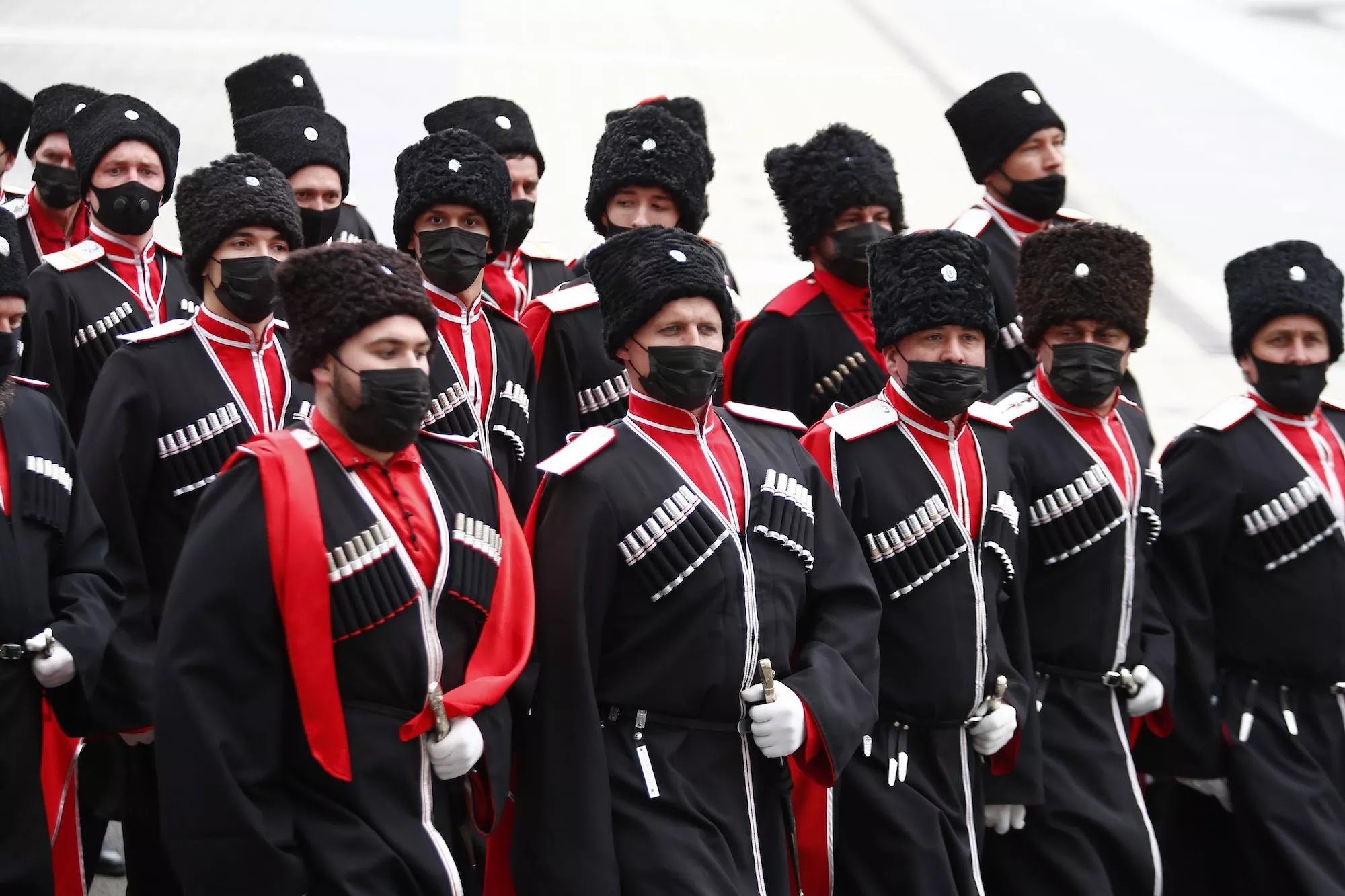
The law of the RSFSR "On the rehabilitation of repressed peoples" was adopted on April 26, 1991. This day is of particular importance for the Kuban Cossacks, because they have the opportunity to return to their way of life, with its traditions and culture. Cossacks are an integral part of our society, they are always at the forefront, in the service of the state. Even now, in difficult conditions, the Cossacks remain at their posts - at the state borders, as part of mobile detachments, together with representatives of law and order, they monitor security and compliance with quarantine measures. Today, the Kuban Cossack army of the Starominsk region has 670 people. 18 people are serving. 

The system of Cossack education of the district includes 2 schools and a kindergarten, as well as 9 classes and groups of Cossack orientation with a total number of more than 300 people. The ataman of the district Cossack society is the military foreman Vladimir Vasilyevich Gorb. - On the eve of our main holiday, I wish everyone a peaceful sky, health and strengthening of primordial traditions. Let's not forget the main thing - the strength of every nation is in unity! Confessor of the Starominsk Cossacks Father Alexander sincerely wished all the Cossacks of the region: Remember your history and draw the right conclusions. A Cossack without faith is not a Cossack, this must be adhered to. The ataman of the village Cossack society, Nikolai Nikolaevich Kostenko, told what he had to start with at first: – Cossacks for me is life. When the law on our rehabilitation came out, they immediately began to act in the direction of restoring everything that had been lost during the years of Soviet power. It was very hard at times. Many did not understand why this was necessary, they called it “mummers”. The whole way of life, all the traditions of the people were destroyed and eradicated over the years. Our task is to revive and pass on to children the traditions, lifestyle and spiritual values ​​of the Kuban Cossacks. So that our children honor their parents, protect their Motherland and love their Motherland. The Chief of Staff Igor Alexandrovich Kalinin spoke in more detail about the activities of the Cossack society. - For thirty years of active work on the restoration of the Cossacks, a lot has been done, and even more remains to be done. In recent years, many difficulties have arisen, not all plans have been implemented, although we have made a big breakthrough and achievements in the education of young people. Two schools with Cossack education have appeared in the district, I would like more, but so far it is not always possible to achieve the approval of parents, although, if we talk about children, they are willing to meet and attend training camps and competitions with pleasure, there are many interested young people and in military-patriotic clubs. The Union of Cossack Youth has been created in the region, we have organized a branch of the Union on the basis of Cossack schools, classes and groups of Cossack orientation. There are more than 500 of them in total. - What exactly are you trying to recover? - First of all, to restore the patriotism of young people, which is not in the word itself, but in concrete deeds. Such as volunteering, helping and supporting loved ones, restoring spiritual values ​​and family life. Men have become more passive than women - this is not right. Before, in Cossack families, the way of life and way of life was clearly spelled out by time. The woman was the guardian of the house and family, the entire household lay on her shoulders, and it was not worth it for her to wave a saber on the battlefield. A woman must be loved, protected and carried in her arms, but a man is a protector, he must defend the honor, the Fatherland and be the main support and breadwinner, the core of the family. The Cossack, by his Orthodox faith and conviction, is first of all a master on earth. It is these moral guidelines that I want to restore and instill in young people. - What are the main tasks of the Cossacks these days? - Now it is important to work with the provision of humanitarian aid. We provided first aid to children and women who were evacuated from the Donetsk and Luhansk regions. Funds were allocated by the district Cossack society, they were used to purchase goods for refugees. Help was sent to Rostov-on-Don. Now an action of humanitarian aid is being organized for our troops involved in a special operation. Schools and military-patriotic clubs have collected everything the soldiers need. The guys wrote letters to soldiers in military hospitals and in the war zone. Warm words of children will be a good spiritual support for them.

Cossacks of the Krasnoarmeisky district celebrate the 31st anniversary of the rehabilitation of the Kuban Cossacks The law "On the rehabilitation of repressed peoples", including the Cossacks, was adopted on April 26, 1991

A prayer service for the Kuban Cossack army was held in Krasnodar


Cossacks of the Yekaterinodar District Cossack Society took part in a combined-arms prayer service on the square in front of the Cathedral of the Holy Prince Alexander Nevsky, a prayer service of the Kuban Cossack Army was held, dedicated to the 31st anniversary of the rehabilitation of the repressed peoples, in which about 2 thousand Cossacks of the historical departments of the Kuban Cossack Army, including the Cossacks of the Kuban capital, took part. “The law became not only the starting point for the revival of the Russian and Kuban Cossacks, but also allowed us to once again be openly proud of the glory of our great-grandfathers, as well as to revive the Cossack way of life on the territory of the Krasnodar Territory. During this time, the Kuban Cossack army restored the historical departments, strengthened and became the largest registered Cossack army in the country, with a population of over 57 thousand Cossacks, - said the vice-governor, ataman of the troops Alexander Vlasov. Member of the Federation Council of the Federal Assembly of the Russian Federation, Senator from the Krasnodar Territory Vladimir Beketov and First Deputy Ataman of the All-Russian Cossack Society Konstantin Perenizhko took part in the combined-arms prayer service on the square in front of the Alexander Nevsky Cathedral. As well as cadets of the Cossack corps, representatives of the power structures of the region, the clergy. The Divine Liturgy was officiated by Metropolitan Gregory of Ekaterinodar and Kuban. The Cossacks of the Yekaterinodar District Cossack Society took part in the prayer service - about a hundred people in total. - Ekaterinodar Cossacks traditionally take part in events dedicated to the rehabilitation of the Cossacks. We honor the memory of our ancestors, educate our youth according to the traditions laid down once by atamans, including the Knights of St. George, - said Alexei Klyushkin, head of the department for Cossacks and military personnel of the Krasnodar administration. After the prayer service, the procession and the ceremony of consecrating memorial plaques and the opening of a new Cossack memorial in the Church of the Holy Right-Believing Prince Alexander Nevsky in honor of 300 Cossacks - full Knights of St. George took place. For many years, archival research to search for the names of heroes was carried out by the author of the series of books “St. Thanks to his work, not only names and surnames became known, but also the affiliation of the Kuban Cossacks, St. George Knights to battalions and regiments on the fronts of the First World War. The law "On the rehabilitation of the repressed peoples, including the Cossacks", was adopted on April 26, 1991.


Read more »

21/4/22

A detachment of Cossack volunteers was formed in the Kuban to participate in Ukraine


Cossacks from all over Russia are participating in Ukraine, there are 1,500 of them. This was announced by the Deputy Governor of the Krasnodar Territory and Ataman of the Kuban Cossack Army Alexander Vlasov. The other day, the Kuban Cossack army formed another detachment of Cossacks - about 400 people, who will soon go to Ukraine.

The Kuban Cossacks support the decision of the President of the Russian Federation Vladimir Putin to conduct a military operation in Ukraine and recognize the independence of the Donetsk and Luhansk People's Republics. Now about 1,500 Cossacks from all over the country, including the Kuban, are already taking part in the special operation.
Previously, the Kuban Cossacks took part in hostilities in Transnistria, Afghanistan, Abkhazia, Syria, Yugoslavia and South Ossetia. They have experience and professional training, since since 2014 they have participated in hostilities on the side of the Donetsk and Luhansk Republics. Thanks to the military field training that the Kuban Cossack Army has been organizing for more than 14 years, the Cossacks have all the necessary skills and experience.
Ataman of the Kuban Cossack army Alexander Vlasov stressed that in March, the Cossacks sent humanitarian aid to civilians in the LDNR - 45 thousand kilograms of food and water, essentials and personal hygiene products. The collection of humanitarian aid and the formation of new detachments of Cossacks - volunteers will continue.


Read more »

16/4/22

Kuban Cossacks honored the memory of General Kornilov


A commemorative event dedicated to the 104th anniversary of the death of Lavr Kornilov took place on April 16. To honor the memory of the Cossacks who died during the Civil War, the Cossacks of the Yekaterinodar department of the Kuban army, the clergy, and members of the public arrived at the memorial complex at the entrance to the capital of the Kuban.

The vice-governor of the region and ataman of the Kuban Cossack army Alexander Vlasov, deputy chairman of the Krasnodar City Duma Gennady Ufimtsev, Metropolitan Grigory of Ekaterinodar and Kuban took part in the Kornilov commemorations.

A guard of honor was put up at the monument to Lavr Kornilov, a banner group and Cossacks of the Kuban Cossack army lined up on the site in front of the monument and the sculptural composition "Horses". A memorial service for the Cossacks who died during the Civil War was conducted by Metropolitan Gregory with the participation of the confessor of the Kuban army, rector of the Alexander Nevsky Cathedral, John Garmash. Those present honored the memory of Lavr Kornilov with a minute of silence. Wreaths and flowers were laid at the monument in his honor.

“The hard times of the civil war are a difficult time, difficult to assess historically. We hold traditional Kornilov commemorations so as not to repeat the mistakes of the past,” said Alexander Vlasov.

The monument to the Commander-in-Chief of the Volunteer Army Lavr Kornilov is located at the site of his death in 1918 during the storming of Yekaterinodar. Today, this territory is located within the city - on Kalinina Street. Lavr Kornilov died from wounds received in the explosion of a shell that hit the headquarters of the Volunteer Army on the banks of the Kuban River. Currently, reconstruction work is underway in the headquarters building.


Read more »